Introduction: Why Understanding the Manufacturing Process Matters
Rattan outdoor furniture has become one of the most popular choices for residential and commercial outdoor spaces thanks to its durability, timeless aesthetics, and comfortable feel. But for B2B buyers—importers, brands, hotels, or retail chains—understanding how rattan outdoor furniture is made is essential before selecting a reliable supplier.
Quality varies significantly from one factory to another. The lifespan, color stability, and structural strength of a rattan sofa or dining set depend heavily on frame engineering, material selection, and hand-woven craftsmanship.
This guide explains the full manufacturing process used by professional outdoor furniture manufacturers, helping buyers evaluate suppliers more confidently.
1. Materials Used in High-Quality Rattan Outdoor Furnitur
1.1 PE Rattan (Synthetic Rattan)
Most outdoor furniture uses PE rattan, also known as synthetic or all-weather rattan.
Reasons it’s preferred over natural rattan outdoors:
- UV-resistant
- Waterproof
- Mold-proof
- Suitable in rain, sun, humidity, and coastal climates
- Long lifespan (5–10+ years depending on quality)
Key factors that affect PE rattan quality:
✔ UV resistance grade
High-end PE rattan includes UV stabilizers to prevent fading or brittleness.
✔ Thickness (usually 1.1–1.5 mm)
Thicker rattan = stronger + more durable.
✔ Weave type
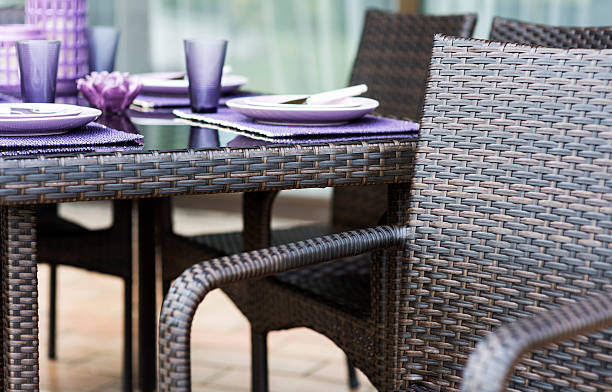
Flat, half-round, and full-round rattan give different styles and price levels.
1.2 Natural Rattan (Used Rarely for Outdoor)
Natural rattan is used for indoor furniture or covered patios.
Advantages: eco-friendly, warm appearance
Disadvantages: not weather-resistant, easily absorbs moisture, cracks under UV exposure.
Comparison of synthetic vs. natural rattan
1.3 Frame Materials
A furniture piece’s longevity depends most on its frame.
Aluminum Frame (Best for Outdoor Use)
- Lightweight yet strong
- Rust-proof
- Ideal for coastal or rainy environments
- Widely used for premium outdoor furniture
Steel Iron Frame (Used for Budget Furniture)
- Strong but heavier
- Requires anti-rust coatings
- Not suitable for humid/coastal regions unless properly treated
Frame Tube Thickness
Common tube thickness: 1.2–1.5mm, high-end commercial chairs may reach 1.6–2.0mm.
2. How the Rattan Furniture Frame Is Built
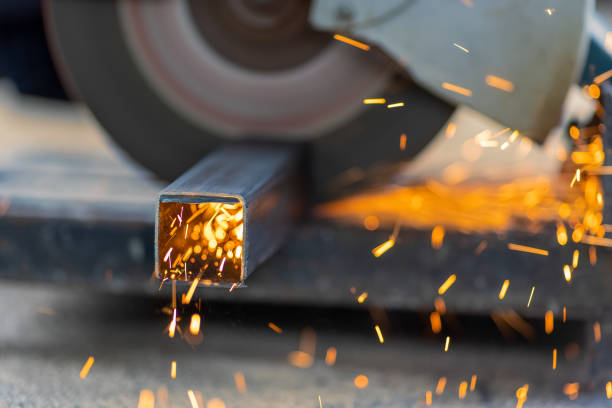
2.1 Cutting and Bending the Aluminum Tubes
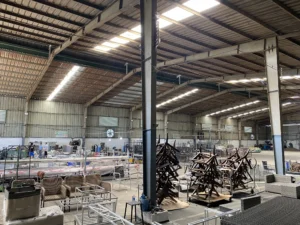
Frames start from precision-cut aluminum tubes.
Computer-controlled bending machines ensure smooth angles and consistency across mass production.
2.2 Welding
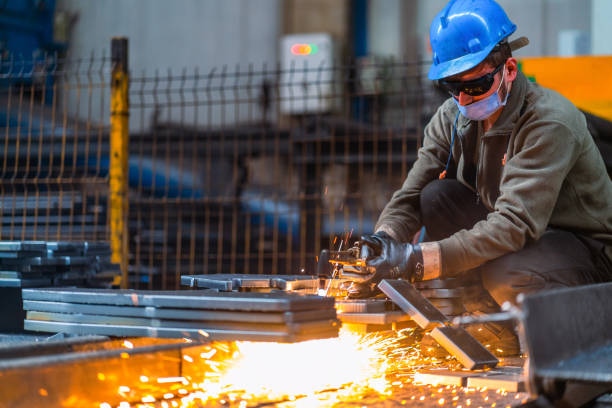
Skilled welders join all sections of the frame.
Strong welds include:
- Full-circle welding
- Smooth transitions
- No weak points
- Additional support bars added to high-stress areas (seat & back)
2.3 Grinding and Surface Treatment
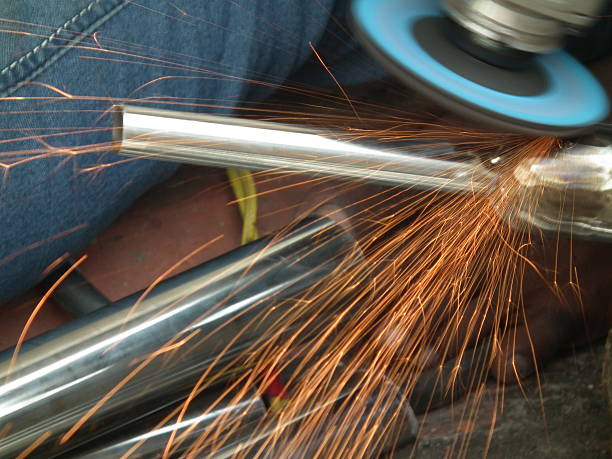
After welding…
- All joints are polished
- Sharp edges removed
- Anti-rust powder-coating applied
- Color is matched according to design requirements
This stage ensures both safety and durability.
3. The Hand-Weaving Process: Where Craftsmanship Matters
Rattan weaving is the heart of the entire manufacturing process.
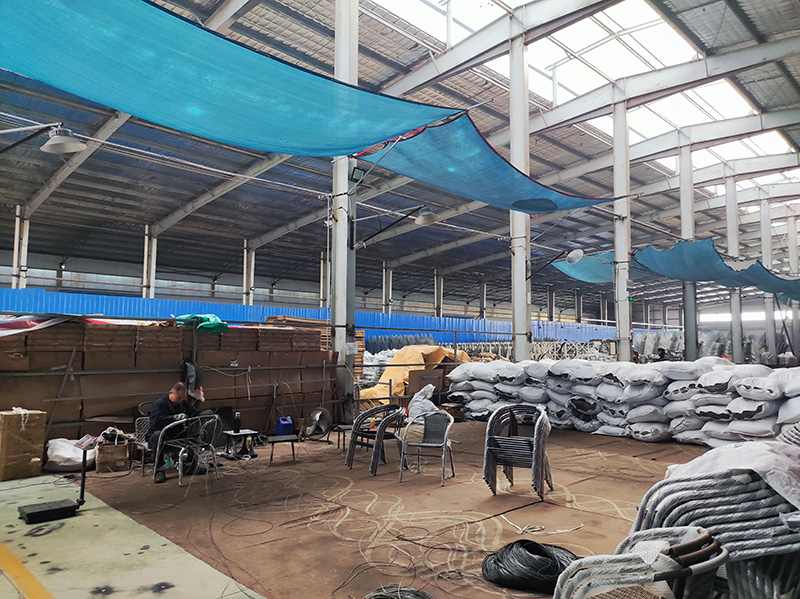
Even with modern machinery, high-quality rattan furniture is still woven 100% by hand.
3.1 Experienced Weavers
A skilled craftsman can weave:
- 1 dining chair in 2–4 hours
- 1 sofa set in 1–2 days
(depending on pattern complexity)
Weaving requires years of training to achieve precision and tightness.
3.2 Popular Weaving Types
Each style affects cost, appearance, and durability.
Flat Weave
- Light, economical
- Suitable for mass-market products
Half-Round Weave
- More premium
- Better texture & durability
Full-Round Weave
- Most luxurious
- Thick, strong, close to natural rattan feel
- Used in high-end resort furniture
3.3 Tightness & Uniformity
Signs of professional hand-weaving:
- Seamless transitions
- Balanced tension
- No sagging areas
- Clean trimming at the edges
- Uniform spacing and alignment
Poor weaving often leads to:
- Loose rattan
- Early cracking
- Deformation after long use
This is why craftsmanship affects long-term durability more than buyers realize.
4. Upholstery and Cushion Production
High-end outdoor furniture includes premium outdoor cushions using:
- Quick-dry foam
- High-density sponge
- Olefin, Sunbrella, or polyester fabrics
Water drainage holes are added to speed drying.
Fabric options vary from commercial-grade heavy duty to soft-touch residential types.
5. Assembly and Final Quality Control
Before export, professional factories run strict QC procedures:
✔ Frame stability test
✔ Weaving tightness inspection
✔ UV and color uniformity check
✔ Cushion fit check
✔ Weight capacity test
(typical chairs must hold 120–150 kg)
✔ Packaging & carton drop test
Ensures products survive long-distance shipping.
6. Why Craftsmanship and Material Quality Matter for B2B Buyers
For importers, distributors, hotels, or furniture brands, choosing a skilled manufacturer impacts:
✔ Product lifespan
✔ Market positioning
✔ Warranty claims
✔ Customer satisfaction
✔ Brand reputation
Good rattan furniture is not about low price—
it’s about stable frames, UV-resistant materials, and skilled hand-weaving.
Conclusion
Understanding how rattan outdoor furniture is made helps B2B buyers evaluate suppliers and identify truly reliable manufacturers. High-quality outdoor furniture requires:
- Rust-proof aluminum frames
- UV-resistant PE rattan
- Skilled hand-weaving techniques
- Strict quality control
- Professional craftsmanship at every step