In recent years, rattan furniture has become a popular choice in the outdoor furniture market due to its unique natural beauty and practicality that is highly favored by consumers. Whether it is a patio, balcony or garden, rattan furniture can create a warm and comfortable leisure atmosphere. However, with the development of technology and diversification of consumer demand, two main types of rattan materials have emerged in the market: natural rattan and synthetic rattan.
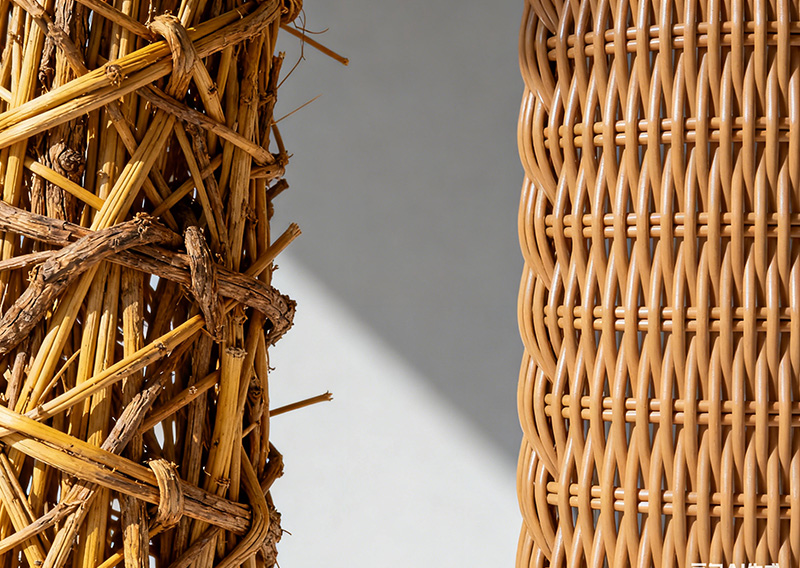
Natural rattan is a natural fiber extracted from plants of the palm family (mainly from the genus Provincialis) found in tropical and subtropical regions. This material has been used for thousands of years and is known for its natural texture and excellent flexibility.
Synthetic rattan, on the other hand, is a synthetic material manufactured using modern chemical technology, and consists mainly of materials such as polyethylene (PE), polyvinyl chloride (PVC) and polyurethane (PU). These materials are designed to mimic the look of natural rattan while providing greater weather resistance and durability.
What is Natural Rattan
Material Properties
Natural rattan is derived from rattan plants found in tropical rainforests, mainly in Southeast Asia, Africa and South America. The material has a naturally porous structure and a relatively low density, making it lightweight and breathable. Natural rattan usually has a diameter of between 6 and 40 millimeters, with a natural surface texture, and each rattan has its own unique characteristics.
Advantages of natural rattan
- Natural and beautiful: natural texture and color, each piece of furniture has its uniqueness, and can be perfectly integrated into a variety of decorative styles
- Eco-friendly and renewable: as a natural plant material, it has a relatively short growth cycle, and is environmentally friendly, in line with the concept of sustainable development
- Breathable and lightweight: the porous structure gives it excellent breathability, and its lightweight makes it easy to move and rearranging
- Easy to process: it can be dyed, lacquered and other treatments, and is suitable for Different design needs
- Good indoor durability: High-quality natural rattan furniture can last for decades in the right indoor environment
- Good comfort: Natural materials have good tactile and temperature-regulating abilities
Disadvantages of natural rattan
- Not waterproof: Natural fibers easily absorb moisture, which can lead to deformation and rotting in the long term
- Susceptible to the effects of weather: UV rays, temperature changes, and humidity fluctuations can cause the material to fade, crack, or become brittle
- High maintenance requirements : requires regular cleaning, oiling and maintenance to avoid prolonged exposure to inclement weather
- Higher price: high quality natural rattan is more expensive to collect and process, and the finished product is usually 30-50% more expensive than synthetic materials
- Mildew-prone: prone to mildew and bacteria in high humidity environments
- Not suitable for year-round outdoor use: needs to be collected and protected from inclement weather, limiting the scenarios of use
What is Synthetic Rattan
Material Properties
Synthetic rattan is made from three main materials: PE (polyethylene) is the most commonly used synthetic rattan material because of its excellent weather resistance and flexibility; PVC (polyvinyl chloride) is less expensive but generally durable; and PU (polyurethane) is in between, with good elasticity and abrasion resistance. Modern synthetic rattan is able to mimic the look and texture of natural rattan to a high degree through advanced manufacturing processes.
Advantages of Synthetic Rattan
- Waterproof and moisture-proof: completely waterproof, will not be deformed or rot due to humidity, suitable for all kinds of weather conditions
- UV-resistant: UV-treated, able to resist ultraviolet irradiation, and not easy to fade and aging
- Low maintenance cost: simple rinsing of water is all that’s needed, no need for special maintenance
- All-year-round outdoor use: it can be placed outdoors all year round, no need to collect and protect it
- Affordable: the manufacturing cost is relatively low, which provides an economic and practical choice for consumers Affordable: relatively low manufacturing costs, providing consumers with economical and practical choices
- Long service life: high-quality PE rattan can be used for 5-10 years in outdoor environments
- Rich color choices: can be manufactured into a variety of colors to meet the needs of different designs
Disadvantages
of Synthetic Rattan
- Lack of natural texture: although the appearance of the similarity of the tactile and visual effects can not completely replace the natural material
- Relatively poor environmental protection: the production and handling of plastic materials have a certain impact on the environment
- Inadequate breathability: the dense structure leads to less breathable than natural materials Insufficient breathability: the dense structure makes it less breathable than natural rattan
- Varying quality: low quality products may be prone to breakage or deterioration
- Thermal expansion problem: slight deformation may occur under extreme heat
- Repairing is difficult: once damaged, it usually needs to be replaced in its entirety instead of being repaired partially
Comprehensive comparison of material properties
| comparison dimension | Natural Rattan | Synthetic Rattan |
|---|---|---|
| Durability | Excellent in indoor environment (20+ years) Average in outdoor environment (2-5 years) |
Good in outdoor environment (5-10 years) Excellent in indoor environment (10+ years) |
| Waterproofing | ❌ Not waterproof, prone to absorb and deform | ✅ Completely waterproof, unaffected by humidity |
| Ultraviolet Resistance | ❌ Prone to fading and aging | ✅ UV-treated for UV resistance |
| Maintenance Requirements | ⚠️ High (regular cleaning, oiling, shelter from rain) | ✅ Low (just rinse with water) |
| Mildew Resistance | ❌ Easy to get moldy in high humidity environment | ✅ Completely mildew and fungus resistant |
| Price Range | ¥800-3000/sqm | ¥500-1500/sqm |
| Environmental Friendly | ✅ Naturally renewable and biodegradable | ⚠️ Plastic material, complicated recycling treatment |
| Applicable Environment | Indoor, semi-open space, mild climate | All outdoor, extreme weather, Commercial locations |
| Lifespan | Indoor: 20-30 years Outdoor: 2-5 years |
Outdoor: 5-10 years Indoor: 10-15 years |
Suggestions for Selection
Natural rattan and synthetic rattan each have their own unique advantages and application scenarios, and the choice of which material to use depends mainly on the specific use environment, budgetary considerations and personal preference.
When choosing natural rattan: If you are looking for a natural texture and environmentally friendly concept, using an indoor or protected semi-outdoor space, and are willing to invest time and effort in regular maintenance, then natural rattan will be the ideal choice. Its unique natural beauty and excellent comfort will add unparalleled charm to your space.
When choosing synthetic rattan: If your furniture is mainly used in outdoor environments, you want low maintenance and high weather resistance, or you have a relatively limited budget, then high-quality synthetic rattan will be a more practical choice. Modern PE rattan has been able to mimic natural rattan well in terms of appearance, while offering greater practicality.
Buying Advice:
Regardless of which material you choose, you should give priority to well-known brands and products with quality assurance.
Natural rattan should choose products that have been treated against insects and preservatives, and understand their origin and processing technology.
Synthetic rattan should be made of PE, avoid low-quality PVC products, and confirm their UV anti-aging performance.
Consider the overall cost-effectiveness, including initial investment, maintenance costs and service life.
Make a rational choice according to local climatic conditions and actual Consider the overall cost-effectiveness, including initial investment, maintenance cost and service life, according to local climatic conditions and actual needs.
Both materials have their existence and market demand. The texture and environmental friendliness of synthetic rattan continues to improve as manufacturing technology advances, while the treatment process for natural rattan continues to be optimized. Choosing the material that suits your needs is the wisest decision.
If you need wicker rattan furniture, please feel free to contact us!