Introduction: Why Frame Material Matters
When buyers evaluate rattan outdoor furniture, the first aspect they usually notice is the weave, color, and style. However, what truly determines durability, weight, rust resistance, and long-term stability is the frame hidden underneath the rattan.
A premium rattan sofa or dining chair can last more than 5–10 years outdoors—but only if the frame is engineered correctly.
On the other hand, poorly made frames can rust, deform, or break within months, especially in humid, coastal, or rainy environments.
This article explains the differences between aluminum, steel, and iron frames, helping B2B buyers choose the right structure for their project or market.
1. Aluminum Frames for Rattan Outdoor Furniture
Why Aluminum Is the Premium Choice
Aluminum frames are widely considered the best option for outdoor furniture, especially for high-end brands, hotels, and resort projects.
1.1 Key Advantages of Aluminum Frames
✔ 100% Rust-Proof
Aluminum does not rust, even in:
- rainy climates
- tropical countries
- seaside environments
- humid areas
Perfect for outdoor use.
✔ Lightweight but Strong
Easy to move, safe for families and hospitality areas.
✔ Long Lifespan
With proper powder coating, aluminum lasts 5–10+ years outdoors.
✔ Ideal for PE Rattan Weaving
Aluminum provides excellent support for hand-woven rattan.
1.2 Tube Thickness and Quality Level
Typical tube thickness for high-quality aluminum frames:
- 1.2 mm (standard)
- 1.5 mm (premium)
- 1.6–2.0 mm (commercial-grade heavy-duty furniture)
1.3 Powder Coating Makes a Difference
Good powder coating ensures:
- scratch resistance
- uniform color
- corrosion protection
- UV stability
Powder coating is critical for long-term outdoor durability.
1.4 Disadvantages
- Higher cost than steel or iron
- Not suitable for ultra-low-budget markets
Best used for:
Premium outdoor furniture, resorts, hotels, villas, and higher-end retail markets.
2. Steel Frames for Rattan Furniture
A Cost-Effective Option with Limitations
Steel is often used in mid-range outdoor furniture due to its lower price, but it requires careful handling.
2.1 Advantages of Steel Frames
✔ Strong and Rigid
Steel has higher tensile strength compared to aluminum.
✔ More Affordable
Good choice for mid-range or budget product lines.
✔ Suitable for indoor or semi-outdoor areas
2.2 Major Disadvantages
✘ Easily Rusts Without Proper Treatment
Steel must be fully powder coated or galvanized; otherwise rust will appear within months.
✘ Not Ideal for Coastal Environments
Salt accelerates corrosion.
✘ Heavy Weight
Difficult for logistics, delivery, and end users to move.
2.3 Tube Thickness
Common thickness for steel frames:
- 0.8–1.2 mm
Some extremely cheap furniture uses 0.6 mm, which is weak and not recommended.
2.4 When Steel Is Acceptable
- Low to mid-range retail markets
- Indoor patio furniture
- Dry climates
- Budget-focused buyers
Not recommended for:
Hotels, resorts, commercial outdoor spaces, or beachfront areas.
3. Iron Frames for Rattan Furniture
The Lowest-Cost but Highest-Risk Option
Iron frames are typically found in very low-cost furniture and are not ideal for modern outdoor use.
3.1 Advantages
✔ Very inexpensive
Used only when price is the priority.
✔ Strong structure
Iron is mechanically strong, but its durability is compromised by rust.
3.2 Major Disadvantages
✘ Rusts the Fastest
Even with paint or coating, iron rusts quickly outdoors.
✘ Heavy and Difficult to Move
Not convenient for daily use or logistics.
✘ Short Lifespan
1–2 years outdoors in humid climates, sometimes less.
3.3 Common Use Cases
- Low-priced indoor furniture
- Indoor cafes
- Covered balconies
Not suitable for long-term outdoor use.
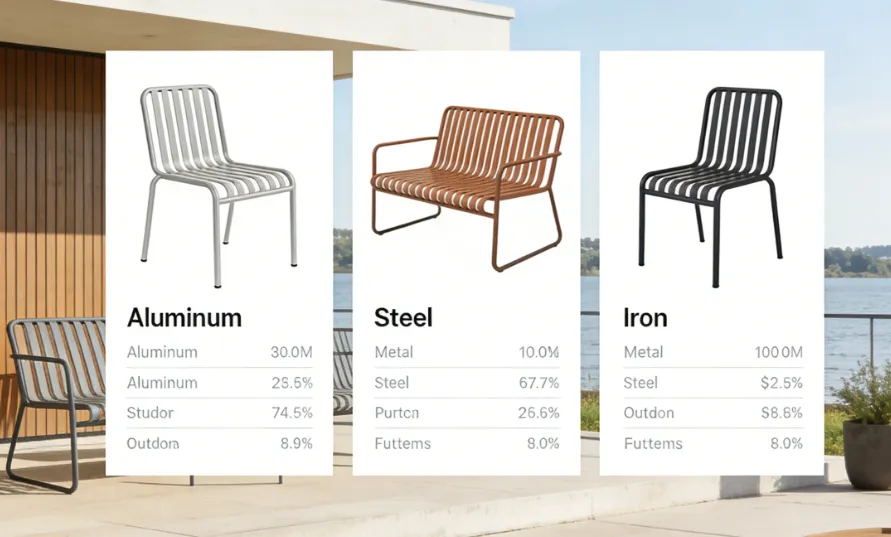
4. Aluminum vs Steel vs Iron: Side-By-Side Comparison
| Feature | Aluminum | Steel | Iron |
|---|---|---|---|
| Rust Resistance | ⭐⭐⭐⭐⭐ Excellent | ⭐⭐ Moderate | ⭐ Very Poor |
| Strength | ⭐⭐⭐ Good | ⭐⭐⭐⭐ Strong | ⭐⭐⭐⭐ Strong |
| Weight | ⭐⭐⭐⭐⭐ Light | ⭐⭐⭐ Medium | ⭐ Heavy |
| Outdoor Lifespan | 5–10+ years | 1–3 years | <1 year |
| Cost | High | Medium | Low |
| Suitable For | Outdoor, resorts, hotels | Semi-outdoor, mid-range furniture | Indoor only |
5. How to Choose the Right Frame for Your Market or Project
5.1 For High-End Buyers (Hotels, Resorts, Villas)
→ Choose Aluminum
Long-lasting, low maintenance, corrosion-proof.
5.2 For Mid-Range Markets or Retail Chains
→ Choose Steel (with high-quality powder coating)
Good value and acceptable durability.
5.3 For Ultra-Low-Budget Markets
→ Iron is acceptable
But only for indoor or covered use.
6. How contract-easy Ensures Frame Quality
Typical quality control includes:
- Full welding instead of spot welding
- Rust-proof powder coating
- Tube thickness verification
- Load-bearing tests (≥120kg for chairs)
- Salt-spray corrosion tests
- Frame polishing for safety and smoothness
Premium outdoor furniture requires stable frame engineering combined with skilled craftsmanship.
The frame is the backbone of every piece of rattan outdoor furniture. Whether you choose aluminum, steel, or iron depends on your target market, budget, and usage environment. Aluminum offers the best performance for outdoor use, steel provides a cost-effective balance, and iron is limited to indoor or budget-oriented furniture.
Understanding these differences helps B2B buyers select more reliable suppliers and make better sourcing decisions.
Looking to purchase outdoor furniture? Feel free to contact us.